Showing posts with label Montessori Environments. Show all posts

Monday, March 26, 2018

A Montessori Home (Ages 7 and Almost 5)


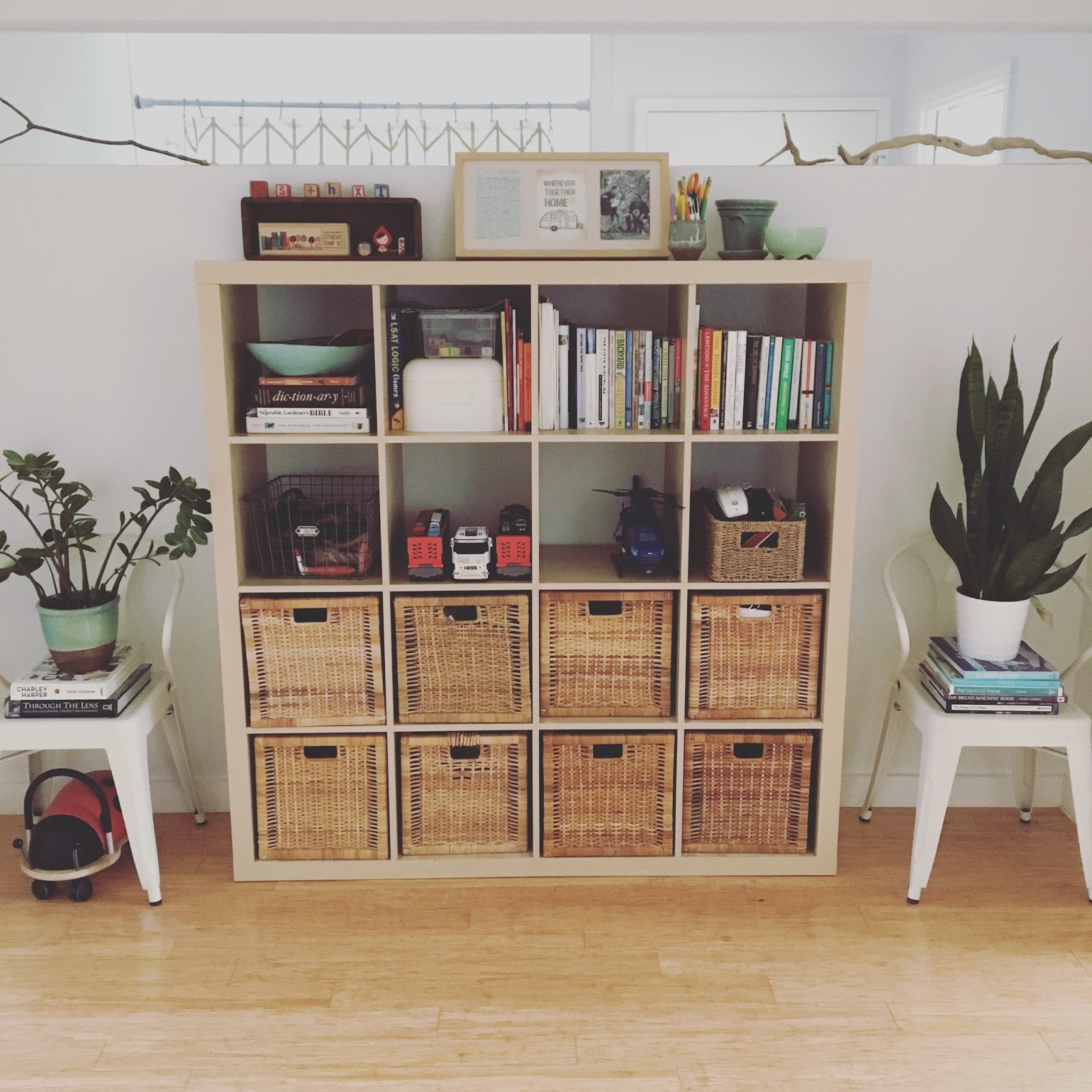
During my Spring Break I spent some time reorganizing our house as part of Simone's online course about preparing a Montessori home. It's crazy how much new stuff sneaks in all.the.time.

Update 1: Boys’ Room

I find that it takes constant vigilance to keep up with growing and changing boys. Tate and Henry still share a room. I spent some time donating toys that they have grown out of, and making sure each thing in their room has a spot. They are constantly bringing new things into the house (mainly things they get from other people, such as goodies from birthday parties), and it’s a constant struggle to keep stuff organized. I want each thing to have a spot, so that they boys can take responsibility for restoring the environment each night. 


Update 2: Art Shelf

I put this shelf together a while ago, but I refreshed it and updated it over the break. Honestly, the boys barely use this area, but I’m still inclined to have these kinds of things available to them. Tate is definitely increasing his interest in art (Henry has never really been interested in it). 


Update 3: Living Room

I moved all of Tate’s costumes into our ottoman, which opened up an entire shelf. I moved the boys’ board games out of a high shelf in the bathroom onto the low shelf in the living room. We’ll see if this arrangement works out! 

Update 4: Adventure Playground


We already have an area of our yard dedicated to free play with bricks, pavers, planks of wood, metal buckets, etc. I added an outdoor storage unit from IKEA (we pulled off the bottom of the legs to lower it more to child-height) that includes nails and tools. 


Share |

Tuesday, May 30, 2017

A New Art Area

I'm always inspired by what Kylie sets up for her boys in their Montessori home, but I never feel like I have the time, space, or energy to follow suit!

But I have wanted to have a dedicated art area for a while. We do have a table in the boys' room, which is a good area for drawing and coloring, but I wanted them to have access to other supplies. However, I didn't necessarily want those supplies to be in their room (because they frequently play in there first thing in the morning unsupervised).

Kylie's recent post about having an art table in the main area made a ton of sense, but it doesn't match up with the layout of our house.

So I decided to turn one of our shelves into an art area by purchasing:

I raided my own craft closet and added:
  • A felting kit
And I added this from IKEA:
The shelf is right our dining room table, so I decided to order a fitted oil cloth tablecloth from this Easy seller. We will keep it in a basket on the shelf, so when we want to do art we can protect the dining room table and go from there! 


Share |

Wednesday, May 24, 2017

Light Box for Children


I added a new light table work to Henry's art shelf. I bought this relatively inexpensive light box and then printed clipart that I thought would be easy to trace. I figured it would be a good way to improve his handwriting! 


Share |

Monday, June 6, 2016

Montessori: Let Children Make Mistakes


I recently wrote this piece for our school newsletter and wanted to share it with you, since so many of you are parents, too! 

--------

My oldest son is in PK4 at Magnolia Montessori For All. Recently, his teacher let me know that he got a little injury in class. He had purposefully been using a pin puncher incorrectly. 

A pin puncher is a slightly sharp object that is used to punch out a shape. It is designed to strengthen a child’s hand in preparation for writing. My son had gotten a warning from another child about how to use it properly, as well as from the teacher. Still, he insisted on using it improperly. He ended up accidentally sticking his finger. 

At this point, you are probably wondering, “Where is she going with this story? How is this possibly a positive thing to highlight about the school?” While this story seems like it’s about my son getting hurt, it’s actually about the importance of teaching our children that they are trusted, that they must be responsible with their freedom, and that there are real risks if they are not. 

One of the most important things to learn in life is how to handle freedom with responsibility. After all, life is full of choices—choices that will bring us up or bring us down. Once we are adults, no one can make those choices for us except ourselves. 

In Montessori, we do everything in our power to guide children to learn how to make responsible choices for themselves—choices that bring them up in life. We start this process very young because it takes a long time to teach children how to handle freedom well. If we want 16 year-olds to be able to drive a car on their own responsibly or an 18 year-old to wake themselves up and go to a 9am class in college, we have to give them real opportunities to be responsible for themselves and to be careful as they are growing up. 

Teaching responsibility is difficult because it means our children will sometimes fail, face disappointment, or even get hurt. But when we allow them to experience these things over an extended time in a gradual way, they build the confidence and resilience they need to be successful in college and the world beyond. 

Photos courtesy of Hank & Tank Photography (my husband!)


Share |

Tuesday, June 2, 2015

Toilet Training in a Montessori Way: Win a Free Book!


The Montessori approach to toilet learning is very different from the conventional approach. First, we call it "learning" rather than "training," which sounds like semantics, but it actually highlights a conceptual difference. We don't use rewards to train children; we set up an environment that allows them to teach themselves how to use the toilet. 

Extrinsic rewards like stickers, candy, and other special treats work like magic, but, if overused, they can create children who are dependent upon adults in order to make good decisions. I saw the effect of this when I was a first-year teacher. I worked at a school in rural Louisiana that had corporal punishment, so I worked very hard to never send children to the principal's office. Instead, I relied on all sorts of extrinsic motivation to get my children to make positive choices. And it worked! But then they would move on to 4th grade and all of the motivation dissipated because I was no longer there dolling out the rewards. 

Then I moved to a middle school that used the same kind of extrinsic motivation system of rewards and punishments. I thought it would work better because we were using the same system consistently for four years. However, once the children went onto high school, the same thing happened. They hadn't really internalized anything that we had been trying to teach through rewards and punishments.

When I found my way to Montessori, I learned all about how using extrinsic motivation can actually hinder the development of intrinsic motivation. At a workshop I attended, the speaker explained really clearly that using extrinsic motivation creates children who are dependent upon adults for affirmation. When those same children become middle-schoolers, they shift their dependence to their peers instead of their parents and are are more likely to make bad decisions in order to get affirmation from their peers. 

So the toilet learning process uses very natural consequences in order to enable children to learn how to use the toilet independently. Here's the process:
  1. Start very young. Montessorians tend to start the toilet learning process with children between 12 and 18 months. We started Henry at 18 months, but we have not yet started with Tate (who is 22 months). We are going to start wholeheartedly this summer.
  2. Set up the environment to support independence. Children need a comfortable toilet (like this one), a place to get fresh underwear, a basket to put dirty underwear, a stepping stool up to get up to the sink, access to soap, and a towel to dry their hands. 
After that, the process is really simple (and hard!). You simply help your child put on training underwear instead of diapers. I love the Hanna Anderson underwear because it is very absorbent and doesn't let pee splash out onto the floor, but it's also expensive so we use Target ones as well. About every hour, you tell them that it's time to use the toilet. They will inevitably have accidents. You simply help them change into new underwear and repeat. 

The most helpful book I've read on this topic is Toilet Awareness by Sarah Moudry. I'm thrilled that she offered to do a giveaway on Feeding the Soil! 

To enter to win a free copy of Toilet Awareness:
  • Leave a comment with your first name and the first letter of your last name
  • Enter by Friday, June 5th at 11:59pm EST
  • Only one entry per person (but you can ask your friends and family to enter on your behalf!)
I will announce the winner on Monday and ask that person to e-mail me their address. 

Happy Entering! 


Share |

Wednesday, May 20, 2015

Woodworking for a 4 Year-Old


Henry has shown a real interest in woodworking lately, so I purchased a few things for him from Montessori Services. They have books with project directions, child-friendly saws/drills/hammers, and even child-sized safety glasses. I'm excited to see what the projects are like!

----------------------------------------------------

Join us for the First Annual Reflection & Rejuvenation Retreat in Austin, TX, July 10th to 12th!


Share |

Tuesday, June 3, 2014

Summer Schedule


Summer is upon us! 

Several months ago, Matt and I were brainstorming what to do with Henry for the summer. We still have a nanny for Tate (which is awesome because I work from home right now while the site is being prepared for the school). I really wanted some kind of nature-based camp, but a) it's hard to find something for three year-olds and b) I had a such a negative experience with his first daycare experience, that I'm cautious about where he spends his days. It's so hard to know how a childcare facility will handle conflict between children. First and foremost, I want my children to feel safe. I don't want a childcare facility to reinforce the idea that my child should "stick up" for himself. 

At his last conference with his Montessori teacher, I asked her what she thought was the best way for a three year-old to spend the summer. Her first recommendation was that we stay home with him. When I told her that wasn't an option, she recommended that he stay home with the nanny. 

The truth is, I think Henry is going to love being at home this summer. It's been harder and harder for him to want to go to school in the morning because he has to leave behind me, Tate, the nanny, and my co-workers every day. I like the idea of giving him a long, leisurely summer (like Simple Parenting).

With that said, I think it would be really helpful for him to have some structure to his day. Perhaps something like this:
  • 7:00ish = Wake up and snuggle with us in bed; get dressed; make breakfast
  • 7:45ish = Clear his breakfast dishes and wash the dishes (move the learning tower over to the sink and put on our water-work apron)
  • Until 9:30am (when Tate goes down for his first nap) = Play with Danielle and Tate
  • Continue independent play until 11am (with the option to fix himself a snack during his play/work time)
  • 11:00ish = Begin lunch preparation
  • 11:30ish = Eat lunch w/Tate and then clear and clean dishes
  • 12:15ish = Walk to the park
  • 2:30pm = Tate's second nap; Henry and Danielle read books and then Henry plays in his room by himself quietly
  • 3:15pm = Make a snack
  • 3:30pm = Play with Danielle or go on an adventure with me (to the YMCA pool, library, play date, etc.)
  • 5pm = Help with dinner
  • Bath
  • Evening walk
  • 7:00pm = Books and bedtime by 7:15
I still need to figure out what he can make for his lunches and some new activities to put on his shelves, but I think the general schedule looks good! 


Share |

Monday, May 19, 2014

Montessori Moments: 3 Year-Old & 10 Month-Old


These "Montessori Moments" posts are meant to highlight some of the ways we implement the Montessori method in our home. Many of the activities that are featured--cooking, cleaning together, going out into nature, etc.--overlap with other parenting philosophies or might seem like things that parents just do with their children intuitively. I've still chosen to highlight them here because they are integral to the Montessori approach to parenting and education and fit within a comprehensive continuum of activities that support children as they undergo the important work of forming themselves. For more information about incorporating Montessori into the home, I recommend How to Raise an Amazing Child the Montessori Way for a basic overview. For more insight into Montessori as an educational philosophy, I recommend Montessori Today. When trying to implement Montessori with infants and toddlers, I recommend Montessori from the Start and Joyful Child, as well as my favorite resource, which is a DVD documentary of Montessori at home with a 20 month old called Edison's Day.

It's amazing watching a baby play with a simple ball and box toy. Babies are just amazing. I never had this Object Permanence Box (featured above) with Henry (I tried using this one from Amazon instead by pulling out the rubber and putting away the mallet), but my friend lent this one to me for Tate, and I love it. He is so engaged with this work. I highly recommend it. 


I love that baby stage when they start pulling up on everything and trying to use everything and anything as a walker. Take has been using his walker wagon like crazy these days! Rather than lead a child by their hands to "walk" them, in a Montessori environment we teach them how to pull up on their own and direct the walker wagon to walk themselves. They start to build their confidence and their sense of self through their interactions with the environment. It's amazing to watch. We purchased this walker wagon for Henry (and will donate it to the Nido environment at my school when we're done with it), but in retrospect I wish we would have purchased the Radio Flyer Walker Wagon. It serves the same function of being super sturdy so the youngest ones can pull themselves up, but it has the added benefit of being able to (comfortably) fit older children, so its use is extended a lot longer.   


Henry and I have been doing a lot of puzzles these days. Our favorites are:
  1. Farm puzzle
  2. Firetruck puzzle
  3. People of the world puzzle
I feel like Henry learns so many life lessons from such a simple activity. He learns persistence, patience, delayed gratification, the need to try different strategies when something isn't working, visual discrimination, hand-eye coordination, fine-motor skills--the list goes on! 


That's a little of what we've been up to around here! (And just hanging out outside.)


Share |

Tuesday, April 22, 2014

Montessori Moments


These "Montessori Moments" posts are meant to highlight some of the ways we implement the Montessori method in our home. Many of the activities that are featured--cooking, cleaning together, going out into nature, etc.--overlap with other parenting philosophies or might seem like things that parents just do with their children intuitively. I've still chosen to highlight them here because they are integral to the Montessori approach to parenting and education and fit within a comprehensive continuum of activities that support children as they undergo the important work of forming themselves. For more information about incorporating Montessori into the home, I recommend How to Raise an Amazing Child the Montessori Way for a basic overview. For more insight into Montessori as an educational philosophy, I recommend Montessori Today. When trying to implement Montessori with infants and toddlers, I recommend Montessori from the Start and Joyful Child, as well as my favorite resource, which is a DVD documentary of Montessori at home with a 20 month old called Edison's Day.


Creating an environment of yes's: There are some people who love rearranging their furniture constantly. I am not one of those people. I prefer to set it and forget it. But that isn't possible when you try to create an environment of yes's. Once Tate started pulling up on shelves around six months, I took some time to remove all the fragile items off the small bookshelf on the end of our kitchen island and instead store them inside a drawer. This drawer is low to the ground, so Henry can easily access it.

Following our curiosity: While walking down by the creek behind our house one day, Henry and Matt found an animal's jawbone. Matt set it on top of our fence, and we didn't do much else with it. This past Saturday, Henry saw it out our bedroom window and asked about it again. He wondered what kind of animal it was from. I got my notebook and we brainstormed a list of guess. I guessed possum, raccoon, coyote, or dog; Henry guessed hawk, deer, or bear. We looked closely at the jaw and realized that we could actually pull one of the teeth out and put it back in. So amazing! We could also see some teeth that had not broken through the gum.

We searched for images on Google, but the jaw didn't seem to align with any of our guesses. I'm thinking we might need to visit a professor at the University of Texas to figure out the mystery once and for all. 


Adding to our nature bowl: While we try and figure out the mystery, we are storing the jawbone in our nature bowl. It also houses a feather, rocks, seed pods, etc.


Share |

Wednesday, February 26, 2014

Update on the Montessori Floor Bed


On Sunday morning, Tate woke up, crawled to his shelf, pulled up, and began rummaging through a little wooden box with toys in it. It gave me the idea that now might be a good time to give an update about the Montessori floor bed since we've used it through two infants and are still using it with our toddler (is three the official end of toddlerhood?). 

Using a floor bed is similar to using a crib, except that the entire room becomes a crib. For both Henry and Tate, we used a crib mattress (a three-inch one from IKEA) and placed it in the middle of the floor on a soft rug for bedtime and naps. In Henry's first room, we moved it back to the corner every day; in Tate's room we simply leave it in the middle of the rug all the time. 

The Montessori books recommend placing the floor mattress in the corner because infants like the feeling of being more closed in, but it's always felt safer to us to not have it against the wall. 

The first reason I love the Montessori floor bed is the cost. It's much cheaper to buy a crib mattress than an entire crib. But more than the cost factor, I love what it communicates to even the youngest baby. It communicates that they have the freedom to explore their surroundings on their own terms. It also gives them an uninterrupted view of the room, as opposed to seeing it through slats. 

I also love that we never had to go through any huge transition to a "big boy bed." We did upgrade to a regular twin-sized mattress, but we didn't have to put up any bars to prevent Henry from rolling off. And now when we sleep in hotels, he can easily sleep on regular-sized beds when he needs to. 

I completely understand why people don't go this route (and I even know trained Montessorians who choose to go the crib route), but I just wanted to share my perspective about how well it's worked for both boys. It's definitely not a mainstream choice, but it has felt like the right one for our family.


Share |

Tuesday, February 11, 2014

Montessori Practical Life


Henry has definitely undergone the shift that happens in development between 0-3 years-old and 3-6 years-old. It's fascinating to watch him grow! 

After a conference with each teacher, I realized that I've been over-nurturing certain aspects of his development and unintentionally treating him more like a 6-9 year-old. Matt and I are both Montessori trained in 6-9, so that's where we're more comfortable. For example, Henry has shown interest in "doing research," like wanting to learn more about motorized para-gliders after we saw one on a hike (they are fascinating!) and wanting to research whether or not it's developmentally appropriate for him to get a pedal bike. 

The conference with his teacher reminded me of the importance of good ol' Practical Life for young children (and all children but especially the little ones!). I'd like to set some goals for myself around how to encourage more practical life within our home. As always, when I'm trying to make a change in my life, I have to visualize exactly what I want to see myself doing and--most importantly--when I want to do it:
  1. When Matt is playing soccer on Sunday, that's the optimal time for Henry and me to do some work together, especially when Tate is napping. I ordered him a child-sized broom, so we can sweep the front and back deck together. We can also sweep the driveway and sidewalk. 
  2. Another other time for us to do practical life together would be after school. I cut a sponge in half so we can clean his table, his learning tower, and the high chairs together. 
  3. I'd like to be really intentional about cooking dinner with Henry at least once a week. He definitely helps out with chopping, etc., but I find myself relieved when he's engaged in independent play and I can hurry and cook by myself. I'm going to commit to cooking with him from start to finish (including dishes!) at least once a week.
  4. I ordered these beautiful placemats from Kylie, so we can have more of a process around setting the table for dinner. I also ordered this apron and this apron from my friend Karla for cooking/baking and dishwashing.
  5. I also think we need to slow down the evening process, so that Henry can be more involved with clearing the table and putting away his toys at the end of the day. Right now, Matt shuttles Henry and Tate into the bath right after dinner while I do all the cleaning. I think we should push his bedtime back a little later to make time for these important steps.
I need to go back and watch Edison's Day for the 40th time. It's so grounding and beautiful. It helps me rethink what is possible for young children.

Image courtesy of How We Montessori Shop


Share |

Tuesday, January 28, 2014

Montessori Bar and Mirror


At the six-month mark, Tate began trying to pull up on things, and we knew it was time to install the Montessori bar on our mirror. The bar is installed at chest-height for the baby, which I think is approximately 17 inches. The baby uses it to pull up into a standing position and later practice cruising. 

We had a neighborhood handyman install it the first time, but it pulled right out of the wall! The next time we asked our friend to do it. At our little New Year's Reflection and Resolution-setting party, my friend and I decided that her husband would install our white board and railing for Tate, if we taught her how to cook a soup and had her and her family over for dinner. 

He decided to install it into the wood frame of the mirror because the spacing of the studs was a little off. Installing it onto the frame of the mirror meant that he had to saw a little of the bar off, which seemed to be pretty simple for him. 

The bar is simply a curtain rod from IKEA. You could also think about using some hand railing material from a home improvement store like Home Depot or Lowe's. 


Share |

Tuesday, October 15, 2013

Montessori Home Tour


I had the great fortune of taking a Montessori parenting class with Sarah Moudry (the mom featured within my all-time favorite Montessori video, Edison's Day). We started when Henry was five weeks-old, and it was amazing to have her as a resource to answer my questions and provide guidance. Although I haven't read it yet, I bet there's some useful information in her book about toilet learning.

She's presenting at an upcoming conference and she asked me to make a video about how her class impacted how we do Montessori in our home. In case you're interested, here's a little tour of what some of our Montessori spaces look like in our new home. 

You'll basically see everything you've already seen in Henry's one-year-old Montessori room and his Montessori nursery. We honestly haven't updated his toys very much because he prefers to make his own fun with various things he finds around the house. 


Share |

Wednesday, August 21, 2013

Montessori Toys for a One Year-Old


A friend of mine asked for Montessori toy recommendations for a one year-old, and I immediately went to Kylie's post. Sadly, I misread it and thought many of the links were only available in Australia, so I decided to recreate a similar list for my friend (and later realized the Australian links were in addition to the U.S. links!--how long can I blame the post-partum hormones?). There's some overlap, as well as some different items. Henry has enjoyed most of these toys for the past year and a half.
 
Here are the basic guidelines for choosing Montessori toys for one year-olds:
  • They are very concrete thinkers and they are trying to learn all they can about the world. Toys should help them build that understanding (like putting a ball in a hole and watching it roll out or doing basic puzzles).
  • As much as possible, toys should have a "control of error." In other words, it should be clear to the child when it's been done correctly or incorrectly (like stacking rings from largest to smallest). That process helps with their problem-solving and independence.
  • Toys should be beautiful, attractive, and made of natural materials (like wood versus plastic). Toys should require active engagement from the child (like blocks) as opposed to passive engagement (like battery-operated toys). 
  • As much as we should offer interesting toys in the environment, we should also just try to spend time outside in nature, following the child's lead as they pick up rocks, hold earthworms, etc.
In a Montessori environment, toys are set out on shelves that can be accessed by the child. Each toy has its own spot, as opposed to being thrown into a bin. The idea is that children's brains are literally absorbing the environment, and order in the environment helps them build order within their minds. It's also recommended to rotate the toys out every couple weeks (putting away the current ones and bringing out old ones), so the environment is stimulating and attractive. I never have enough toys to do this! Instead, I just have an area for Henry in every room (except our bedroom).
 
Honestly, many of the toys below are still on his shelves. He still plays with many of them, often in different ways. Most of the time, he plays with random things he finds around the house; his current obsession is playing with Tate's burp clothes.
 
Around 18 months, children will be ready for more "practical life" activities. I recommend buying a learning tower at the one-year mark, even though children won't actually use it for helping with cooking for several more months. They can use it to practice climbing for now. When they're ready to help with cooking, this site and this site have wonderful child-sized utensils. Those sites also have wonderful glass cups for young children to drink from, porcelain plates to eat from, and real silverware--all of which can be used from the time a child begins eating. Although things will break from time to time, it's helpful for children to learn that there are real consequences from throwing things or treating objects without care. Also, they love to mimic the adults around them by using child-size replicas of adult objects.
 
Without further ado, here are some toy recommendations!
 
With that toy (above) I put away the mallet and take out the rubber that lines the holes and instead turn it into a "put the ball in the box and watch it roll out" game. Great for understanding object permanence.


Share |

Tuesday, August 6, 2013

Wooden Toys from IKEA


Before Tate's arrival, Henry and I took a trip to IKEA to purchase some fabric to make a new bed for Hoss. His old one finally bit the dust after five years.
 
I struggle to walk through stores like IKEA and Target without finding things that I suddenly "need," even though they weren't on my original list. That's why I try to avoid shopping as much as possible!
 
However, I love the two toys we bought and wanted to share them with you.
 
First, I bought Henry a train set. There were four different boxes with various pieces (for about $10 each), so we bought all four. Together, they create a varied and comprehensive set. It includes pieces to make bridges, straight pieces, curved pieces, tunnels, and forked pieces. I love that the toy gets constructed in new ways every time and that the variations are seemingly endless! Sometimes we make small loops of a track and other times we twist it all around the living room. I also love the "control of error" that is inherent in the toy. In other words, it's very easy for Henry to tell when he's made a mistake and when he's corrected the mistake. For example, most of the pieces only have tracks on one side. If he sets it up the wrong way, the train won't lock into the track and he knows to flip it over. Also, there are very specific ways that the pieces connect to each other, so he knows to try a different piece it they aren't lining up.
 
Also, the train cars are magnetic, so some ends repel each other, while the opposite ends attract. Henry has to use problem-solving to figure out how to get the trains to connect.
 
Further, it's a toy that requires care and attention. Henry has to manually push the train around the track and it will sometimes slip off. He has to pay attention to when that happens and then fix it.
 
Further, I love that it's a "big" toy that breaks down into small pieces that fit within a basket on the shelf. It helps our house feel organized rather than cluttered and chaotic. Plus, I find the wood material and the colors simply beautiful.
 
It's definitely a big hit around our house! Not only does he enjoy it, he also learns a ton from playing with it. He learns patience and delayed gratification as he constructs the tracks. He learns persistence and problem-solving when he encounters glitches that need to be solved. He internalizes pride and self-confidence when he successfully sets up and plays with this toy.
 
According to Montessori theory, children essentially construct their personalities in the first six years of life. It feels good to provide Henry with experiences that will have a positive impact on his development!
 
The other toy we purchased was for Tate. For something like $8, we got a simple wooden bead toy. It will look beautiful on the shelf of his nursery (when we finally move and get it set up for him), and it will provide good incentive for him to learn to pull up and sit up.
 
If you're interested, here's a link to all of IKEA's current wooden toys...


Share |

Tuesday, July 30, 2013

An Infant Montessori Environment


When I was pregnant with Henry, I started getting his Montessori nursery ready several months in advance. This time around, we didn't create a nursery for Tate at all.
 
In this particular instance, it's not a case of busy-second-time-momness. Really, it was simply a function of the fact that we were scheduled to move into our new house two weeks after his birth.
 
And then the builders tacked on a few more weeks until our house was going to be finalized and two weeks at our rental house with baby Tate started to turn into a month or more. While he still didn't need a full-blown nursery for a single month (since he sleeps in our room), he definitely needed more space dedicated to his needs throughout the house.
 
So here's a quick tour of the ways in which we've made space for Baby Tate in our home:
 
In our office/guest room, I set up a large mirror against the wall and pushed a crib mattress against it. I screwed a hook into the ceiling, so that I could hang mobiles from it. This space is perfect for working on blog posts at the desk while Tate watches his mobiles. Right now, I have the Munari mobile set up in here, but when he tires of it, I can put up the whale mobile, the butterfly mobile, or an abstract mobile.

 
We have a portable set-up that can travel with us to any room, and we mainly use it in the family room. We have a mat for Tate to lie on or we simply use his topponcino. He can either lie on his back underneath this wooden arch (I made black and white cards for him to look at) or he can lie on his stomach and look at this black-and-white accordion book. I like that the mat and arch can be stowed in a closet when not in use. It helps keep the cluttered feeling at bay.
 
In our bedroom, we have a mobile hanging above our bed (that can be raised out of the way when not in use). We also have a Moses basket that we use for napping and nighttime sleeping.

Tate gets lots of cuddle time while breastfeeding and while being put to sleep in the Moby wrap (once he falls asleep, we transition him to his Moses basket). During his brief moments of awake time, we try to give him as much freedom of movement as possible. We try to keep him out of confining contraptions as much as possible (e.g., no swings, infant seats, etc.) and instead let him lie on his stomach or back on a flat surface to give him the greatest range of motion to move his arms, legs, and head.


Share |

Wednesday, July 10, 2013

First Montessori Mobile: The Munari

Image courtesy of bella's casa on Etsy
My dear friend Karla let me borrow her daughter's Munari mobile for baby Tate, and I am extremely grateful. I was incredibly daunted by the thought of following these directions and making one myself, but now that I've seen it in person: a) I promise you can make one, if you're interested! and b) it's worth it--it's so beautiful!
I remember the first time I ever walked into a Montessori classroom full of productive and focused 3-6 year-olds. It looked like magic. The children were contentedly working all around the classroom on different things, but all of them were confident and competent beyond what I had typically witnessed from children that age. I was in college at the time, and I remember being blown away by watching a 3 year-old use an apple slicer to cut an apple (with the slightest bit of teacher support), arrange the pieces on a ceramic plate, and walk around the classroom to offer slices to her classmates.
The thing about Montessori, though, is that it isn't magic. It's a systematic, sequenced approach to preparing the physical environment and modifying our interactions with children in response to their needs to support their optimal development and help them complete their formation of self.
The focus, concentration, competence, confidence, and respect that I witnessed in that classroom connect directly back to the first mobile in the Montessori sequence: the Munari.
I'm not saying that every child in that classroom had experienced Montessori from birth. In fact, I bet most of their families came to Montessori around the age of three. But I am saying that the Munari mobile is designed with that 3-6 year-old classroom in mind (and the 6-9 year-old classroom, and the 9-12 year-old classroom, and the well-adjusted adult, etc.).
It's designed to give the infant exactly what s/he needs to push her/his development forward in the right way at the right time. It's so easy to spend all of our time holding newborn babies. While that kind of contact and nurturing is important, it's also important to give them time to freely develop their movement. Placing them on their backs under developmentally-appropriate mobiles gives them the stimulation and freedom they need to begin to develop their eyesight (the ability to focus and track), their concentration, and control of their bodies.
When I talk about "stimulation," I'm not talking about the kind of stimulation that stems from parents' desire to get their kids on the Ivy League track as soon as possible. I'm talking about providing exactly what a child craves--a developmental challenge that is within and just beyond their range to satisfy their natural desire to grow and form themselves.
The Munari provides just that. The black-and-white images optimize how much a young infant is able to see of the mobile. The glass bulb (you can use a Christmas ornament) is shiny, attractive, and intriguing. The lightweight mobile is designed to catch air currents and move slowly enough for an infant to practice tracking. The mobile has four different elements to it, which is in the recommended range of 3-5, so as not to overstimulate the absorbent mind of young infants.
Here's how I use the mobile with Tate: Throughout the day, we move through a continuous cycle of breastfeed, activity, sleep. During the activity time, I sometimes place him under the Munari mobile and give him uninterrupted and sustained time to watch it. I don't interrupt him by talking with him. Instead, I engage in my own work, which might look like writing a blog post, leaving the room to put in a load of laundry, or reading a book. I follow his lead when it comes to how long he wants to watch the mobile. I also watch for signs of drowsiness. For example, when I start to notice yawns, we start preparing for a nap.
Right now his awake time is very short, so he only spends about ten minutes under a mobile. We have three different options that he rotates among. Pretty soon we'll add in other things like looking at a black-and-white accordion book on his stomach, going outside to lay under a blanket beneath a tree, dancing with me to music, etc.
P.S. If you're interested in the Munari mobile but aren't creatively-inclined, you might consider purchasing it from the following site:
----------------------------------------------
REMINDER: Registration is now open for the next Purposeful Conception Course: Preparing Your Mind, Body, and Life for Pregnancy, which starts on July 14. Register today! We'd love to have you join us!


Share |

Monday, April 29, 2013

A High Chair for Independence

I'm so glad that Matt and I invested in the Tripp Trapp high chair for Henry. It's recommended within the Montessori community because it facilitates and supports a child's independence. From a young age, they can begin climbing in and out of it independently. It also slides right up to the table to help the child feel like part of the family. The chair grows with the child and can be used for many years (since children are too short to sit comfortably in a regular chair for quite a while).

As we prepare to welcome a new baby into our family, I've been thinking about the high chair situation. If we tried to move Henry into a booster seat, I feared that he wouldn't be able to climb up and down independently. 

I had resolved myself to adding yet another expensive Tripp Trapp to our baby registry. 

Then we spent the weekend eating out with Matt's parents, and I watched Henry climb in and out of those wooden restaurant high chairs with complete confidence, grace, and stability. I was reminded by my friend Kelly's idea to take the bar off the restaurant-style high chair. Brilliant! 

I managed to locate one on Craigslist for $20. Now Henry can use the bar-less restaurant-style high chair and the new baby can inherent the Tripp Trapp when he's around six months-old. The only downside to the new high chair is that it's not as stable as the Tripp Trapp. Henry could surely push himself backwards by kicking off the table hard enough. It's not a deal breaker; it just means we need to be even more vigilant with supervision when he's in it.


Share |

Wednesday, April 24, 2013

Brainstorming: A Montessori Bedroom


Henry's Montessori bedroom changed a lot during the first year of his life when he went from lying on a movement mat watching mobiles to pulling himself up on furniture and low shelves. When he turned one, we moved to Austin and his room became even more simple (primarily since we moved into a bigger house and we didn't need his bedroom to serve so many different functions). It honestly hasn't changed very much from 1-2, except that we recently traded out his crib mattress floor bed for a twin-sized mattress with a duvet cover.
As we prepare to move into a new house, I'm rethinking his bedroom and wondering how to set it up to meet his growing needs. This article from The Montessori Foundation had a couple good ideas, such as:
  • Incorporating an area for Henry to select and play his own music (I'm debating between a CD player and an MP3 player)
  • A nature corner for Henry to collect and display things he collects outside
  • An area for Henry to produce and display artwork (although I'm wondering if it would be better to put his easel in a more common area, since he'll want to be out with the rest of us)
The other complication is that Henry and his brother will likely share a room, once the baby is sleeping through the night. This means the room will have to accommodate an infant as well as a growing toddler.
Here are the main components I want to be sure to include:
  • An area for sleeping. Since Henry likes to snuggle into the corner (i.e., where the two walls come together), there's really only one place where his bed can go in his new room. Once the baby is old enough to join him, I wonder if we should build some type of loft bed and keep the baby's twin mattress on the floor. A loft bed would be less bulky than bunk beds, and it would keep the baby low to the ground on the bottom.
  • An area for dressing. Henry's closet will have shelves that he can reach, so he can dress himself, but we should also have a mirror, so he can see how he looks. I like the way Otis's room is set up with a little table, brush, and handkerchief.
  • A reading nook. This might just be Henry's bed on the floor since we're always so comfortable reading there. But we'll need a way to organize his books.
  • An area for toys. Honestly, we make space for Henry's toys all around the house, so he doesn't actually need that much space in his room for toys.
I think we'll keep the art/writing/crafting area out of his room, since we'll also have a guest/craft room. Although perhaps we should at least have a small table and chairs?


Share |

Wednesday, November 7, 2012

Montessori Holiday Presents

 
As the holidays approach, I've had a couple requests to talk about how we communicate to others about what kind of toys we prefer for Henry. It's a delicate situation, for sure. It's difficult to sound sufficiently and authentically grateful for others' generosity while simultaneously saying, "We prefer not to have plastic or battery-powered toys." We're lucky because our families ask for lists of things. When I gave them the list last year (see below), I tried to include a range from very specific items to general brands and/or stores that tend to sell more natural things.

------------
Hi All,

I hope this message finds you well!

Matt and I have been thinking a lot about Henry's first Christmas, which is right around the corner! We're ecstatic that we're going to get to see both sides of the family. He's growing so much and we don't want you to miss anything.

If you need/want some gift ideas, here are a few links that might be helpful (I apologize that I just got around to sending this and it's almost December!):
  • Object permanence boxes are interesting for babies
  • This box with pull down drawers looks fun
  • This catalog has lots of kid-sized things that children can use to participate in family life, such as things to use in the kitchen, garden, etc. He'll be doing a lot of that once he hits the 15-month mark
  • Haba toys (available on Amazon) are beautiful wooden toys
  • Plan toys (available on Amazon) are also beautiful wooden toys
  • The Wooden Wagon has some beautiful wooden toys
  • I love this beautiful marble run
  • Nova Natural is also a good site
In Montessori environments, we try to use toys made from natural materials instead of plastic and prefer simple toys to over-stimulating ones.

We're also socking away money for his college fund, so you could always give him an empty box with tissue paper and donate to the fund instead!

The biggest gift of all is going to be playing with all of you! He loves to blow raspberries on bare stomachs, so beware! (And he will lift your shirt to expose your stomach...)

Biggest hugs,

s.
------------

This year, I want to try to think ahead to generate a list of the major things he might need from 2-3 years old. He already got a bike from one of his grandmas as an early Christmas present (which will be his only Christmas present from her). What else might he enjoy in the upcoming year?
It seems like the major categories are: art, music, gardening/outside, woodworking, toys, and cooking.

Wow. Thinking through all of this makes me dwell in possibility about what our life should be like as Henry continues to grow. It feels like our time at home should be filled with practical and creative pursuits: gardening, looking for bugs, watering plants, sweeping, collecting dried leaves for the compost, hanging dishtowels up to dry, fixing things around the house, building things, drawing, painting, sewing, reading, cooking, baking, canning--the list goes on!

And yet this is not what my life is like right now. My free time is mainly spent in front of the computer: blogging, running e-courses, responding to e-mail, and doing my professional work on the computer. I don't feel like my current priorities compromise Henry's childhood. I mainly do these things while he's napping (from 12-2pm) and after he goes to bed (from 6:30-9:30pm).

When his nap goes away and his bed time gets later, I'll need to figure out how to spend less time in front of the computer and more time living my life alongside Henry. I'm looking forward to it!

What else should I put on his list for year 2-3?


Share |

Related Posts with Thumbnails